What Is Body Roundness Index (BRI)? A Complete Guide
Key Takeaways
- BRI stands for Body Roundness Index — a measure of how “round” your body is, focusing on your waist relative to your height
- Developed in 2013 by Dr. Diana Thomas and colleagues as a geometrically-based alternative to BMI
- Uses two measurements: waist circumference and height — no weight required
- Predicts visceral fat (the dangerous fat around organs) more accurately than BMI
- Healthy BRI is generally between 2 and 4; scores above 6 are associated with significantly elevated health risk
- Growing research base links BRI to cardiovascular disease, diabetes, cancer risk, and all-cause mortality
What Is the Body Roundness Index?
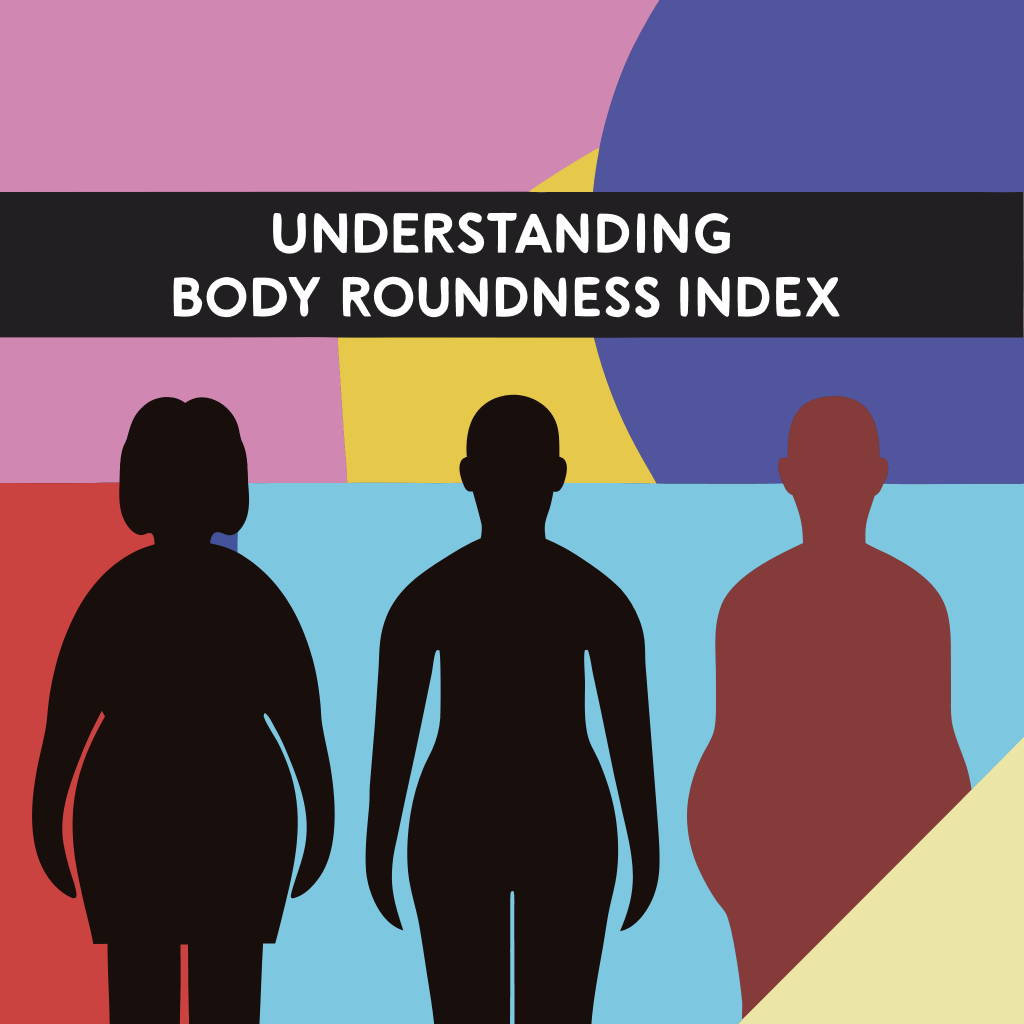
The Body Roundness Index — commonly abbreviated as BRI — is a health measurement that estimates the shape and roundness of a person’s body, with a particular focus on abdominal fat distribution.
Introduced in 2013 by Dr. Diana M. Thomas and colleagues at the College of New Jersey, BRI was designed to address a fundamental weakness in the Body Mass Index (BMI): the inability to distinguish where body fat is located.[1]
BRI treats the human body as an ellipse — a geometric shape — and uses the ratio of waist circumference to height to calculate how circular (or “round”) that ellipse is. A more circular cross-section indicates greater central obesity; a more elongated shape indicates less visceral fat.
The result is a single number — your BRI score — that reflects your body’s roundness and correlates strongly with the amount of visceral fat surrounding your internal organs.
Why Was BRI Created?
For nearly 200 years, the Body Mass Index (BMI) was the dominant tool for assessing body composition and obesity risk. BMI is simple: divide your weight in kilograms by your height in metres squared. But simplicity comes at a cost.
BMI has three critical limitations:
- It ignores fat distribution. A person can have a “normal” BMI while carrying dangerous levels of fat around their abdomen — a condition sometimes called “normal weight obesity” or being “skinny fat.”
- It can’t distinguish muscle from fat. Athletes and muscular individuals are routinely classified as “overweight” or “obese” by BMI, despite excellent metabolic health.
- Visceral fat is the dangerous type — and BMI misses it. Fat stored around the organs (visceral fat) is metabolically active and drives inflammation, insulin resistance, and cardiovascular disease. BMI captures none of this.
BRI was specifically designed to fill this gap — measuring body shape rather than body mass, and targeting the waist-to-height relationship that best captures visceral fat accumulation.[1]
How Is BRI Calculated?
The BRI formula is based on the mathematics of ellipse geometry:
BRI = 364.2 − 365.5 × √(1 − ((WC ÷ (2π))² ÷ (0.5 × H)²))
Where:
- WC = waist circumference in metres
- H = height in metres
- π ≈ 3.14159
The formula computes the “eccentricity” of a body’s elliptical cross-section. Eccentricity is a mathematical term for how far a shape deviates from a perfect circle. A BRI near 1 would represent a perfect circle (extreme central obesity); a very low BRI represents a highly elongated ellipse (very low waist-to-height ratio).
In practice, human BRI values typically range from about 1 to 16, with most healthy adults scoring between 2 and 5.
For a step-by-step walkthrough of the calculation with worked examples, see our guide: How to Calculate BRI.
What Do BRI Scores Mean?
| BRI Score | Category | Health Indication |
|---|---|---|
| Below 2 | Very Slim | Very low central fat; potentially underweight |
| 2.0 – 3.4 | Slim | Low visceral fat; low cardiometabolic risk |
| 3.4 – 4.5 | Average | Moderate roundness; average population risk |
| 4.5 – 5.5 | Above Average | Elevated abdominal fat; increased risk |
| 5.5 – 6.9 | High | High visceral fat; significantly elevated risk |
| Above 6.9 | Very High | Very high central obesity; strongly elevated risk |
These categories are derived from population-level research and should be interpreted in the context of your overall health, age, sex, and other risk factors. They are reference points, not diagnostic thresholds.[2]
What Does BRI Measure That BMI Doesn’t?
The fundamental difference between BRI and BMI is what each measurement captures:
| Feature | BRI | BMI |
|---|---|---|
| Measurements used | Waist + Height | Weight + Height |
| What it estimates | Central (visceral) fat | Total body mass |
| Sensitive to muscle mass | No | Yes |
| Detects “normal weight obesity” | Yes | No |
| Correlates with visceral fat | Strong [1] | Weak |
| Predicts cardiovascular risk | Strong [3] | Moderate |
| Predicts diabetes risk | Strong [2] | Moderate |
Visceral fat — the fat BRI is designed to detect — is stored deep in the abdominal cavity, surrounding the liver, pancreas, and intestines. Unlike subcutaneous fat (which sits under the skin), visceral fat is metabolically active: it secretes inflammatory cytokines and hormones that disrupt insulin signalling, raise blood pressure, and accelerate atherosclerosis.[4]
BMI says nothing about visceral fat. BRI is specifically designed to estimate it.
What the Research Says About BRI
Since its introduction in 2013, BRI has been the subject of growing clinical research. Key findings include:
BRI and Cardiovascular Disease
Multiple studies have found BRI is a stronger predictor of cardiovascular disease risk than BMI. A 2020 meta-analysis found BRI significantly outperformed BMI in predicting metabolic syndrome — a cluster of conditions that raises heart disease and diabetes risk.[2]
BRI and Type 2 Diabetes
Research published in BMC Public Health found BRI was more strongly associated with type 2 diabetes risk than BMI, waist-to-height ratio, and waist circumference alone — particularly in identifying people at risk who had “normal” BMI values.[5]
BRI and Cancer Risk
Emerging research has linked elevated BRI to higher risk of colorectal, uterine, and other obesity-related cancers. The mechanism is thought to involve visceral fat-driven inflammation and elevated oestrogen levels.[6] For more detail, see: BRI and Cancer Risk: What 2024–2025 Research Shows.
BRI and All-Cause Mortality
Studies have identified a U-shaped relationship between BRI and mortality — both very low and very high BRI scores are associated with increased all-cause mortality. This pattern is consistent with what clinicians observe: both severe underweight and high central obesity carry risks.[3]
BRI in Children
A 2026 study found BRI predicted cardiometabolic risk in children aged 8–17 more accurately than BMI-for-age percentiles. This expands BRI’s potential clinical application beyond adults. See: Body Roundness Index for Children.
BRI vs Other Body Composition Metrics
BRI is one of several metrics used to assess body fat distribution. Here’s how it compares:
| Metric | Measurements Needed | Strengths | Limitations |
|---|---|---|---|
| BRI | Waist + Height | Geometric model; captures visceral fat; no weight needed | Less familiar clinically; newer research base |
| BMI | Weight + Height | Simple; widely used; long history | Ignores fat distribution; affected by muscle |
| Waist-to-Height Ratio | Waist + Height | Simple; good predictor of central obesity | Less nuanced than BRI (linear, not geometric) |
| Waist Circumference | Waist only | Direct abdominal fat indicator | No height adjustment; less comparable across heights |
| Body Fat % | DEXA, skinfolds, or BIA | Most direct fat measure | Requires equipment; costly; variable accuracy |
BRI occupies a useful middle ground: it uses accessible measurements (waist and height) but applies a more sophisticated geometric model than the simple waist-to-height ratio.
Limitations of BRI
BRI is not without limitations, and it is important to understand them:
- Newer metric: With research from 2013 onwards, BRI has a shorter evidence base than BMI, which has decades of population data.
- Measurement sensitivity: BRI depends on accurate waist measurement — variation in technique can meaningfully affect the score.
- No universal clinical cutoffs: Unlike BMI (where 25 and 30 are widely accepted thresholds), BRI does not yet have universally agreed-upon cutoffs for clinical diagnosis.
- Population variation: Optimal BRI ranges may differ by ethnicity, age, and sex. More research is needed across diverse populations.
- Not a standalone diagnostic tool: BRI should be considered alongside other clinical markers (blood pressure, fasting glucose, lipid panel) rather than in isolation.
Frequently Asked Questions
Is BRI better than BMI?
For assessing visceral fat and cardiometabolic risk, research consistently shows BRI is more accurate than BMI.[2][3] However, BMI remains more widely used clinically due to its long history and simplicity. Ideally, both are considered together.
What is a good BRI score?
A BRI between 2 and 4 is generally considered healthy for most adults. However, optimal ranges can vary by age and sex. A BRI below 2 may indicate underweight status, while a BRI above 5.5 is associated with elevated health risk.
Does BRI change with age?
Yes. As adults age, body composition naturally shifts toward more central fat accumulation, even without weight gain. BRI tends to increase with age, and age-specific reference ranges exist for more accurate interpretation. See: BRI by Age: Normal Scores at 30, 40, 50, and 60.
Can I be “skinny fat” according to BRI?
Yes — and this is one of BRI’s key advantages. A person with a normal or low weight can still have a high waist circumference relative to their height, producing an elevated BRI. This pattern — normal weight obesity — is clinically significant and carries metabolic risks that BMI would miss entirely.
Is BRI used by doctors?
BRI is increasingly referenced in research and preventive medicine contexts, but it is not yet part of standard clinical protocols in most countries. Waist circumference measurement (which underpins BRI) is endorsed by many health organisations as a useful adjunct to BMI in clinical assessment.
Do I need any equipment to calculate BRI?
You need a flexible tape measure to measure your waist circumference and height. That’s it. Our free online BRI calculator handles the formula automatically.
References
BRI development and original research: Thomas DM, Bredlau C, Bosy-Westphal A, et al. “Relationships between body roundness with body fat and visceral adipose tissue emerging from a new geometrical model.” Obesity. 2013;21(11):2264–2271. doi:10.1002/oby.20408
BRI and metabolic syndrome: Rico-Martín S, Calderón-García JF, Sánchez-Rey P, et al. “Effectiveness of body roundness index in predicting metabolic syndrome: A systematic review and meta-analysis.” Obesity Reviews. 2020;21(7):e13023. doi:10.1111/obr.13023
BRI and all-cause mortality: Zeng Q, Dong SY, Sun XN, et al. “A body shape index and body roundness index as new cardiometabolic risk marker among workers.” Annals of Human Biology. 2020;47(4):366–374. doi:10.1080/03014460.2020.1781098
Visceral fat and metabolic disease: Després JP, Lemieux I. “Abdominal obesity and metabolic syndrome.” Nature. 2006;444(7121):881–887. doi:10.1038/nature05488
BRI and type 2 diabetes: Chang Y, Guo X, Chen Y, et al. “A body shape index and body roundness index: Two new body indices to identify diabetes mellitus among rural populations in northeast China.” BMC Public Health. 2015;15:794. doi:10.1186/s12889-015-2150-2
BRI and cancer risk: See our article BRI and Cancer Risk: What 2024–2025 Research Shows for detailed citations.
Medical Disclaimer: This article is for informational and educational purposes only. It is not intended to replace professional medical advice, diagnosis, or treatment. Always consult a qualified healthcare professional with questions about your health measurements or risk factors.
Calculate Your BRI Now
Use our free Body Roundness Index calculator — enter your waist circumference and height to get your BRI score instantly, with an explanation of what it means for your health.
Related Articles
- How to Calculate BRI: Step-by-Step Formula Guide — Manual calculation walkthrough with worked examples
- BRI vs BMI: Which is More Accurate? — Detailed comparison of both metrics
- BRI by Age: Normal Scores at 30, 40, 50, and 60 — Age-specific healthy ranges
- How to Lower Your BRI: Evidence-Based Strategies — Actionable steps to reduce visceral fat