Visceral Fat & BRI: Health Risks and What Body Shape Reveals
Key Takeaways
- Visceral fat surrounds your internal organs and is metabolically active — unlike subcutaneous fat under the skin
- It releases inflammatory compounds linked to heart disease, type 2 diabetes, and metabolic syndrome
- The clinical gold standard for measuring visceral fat (MRI/CT) is expensive and inaccessible for routine monitoring
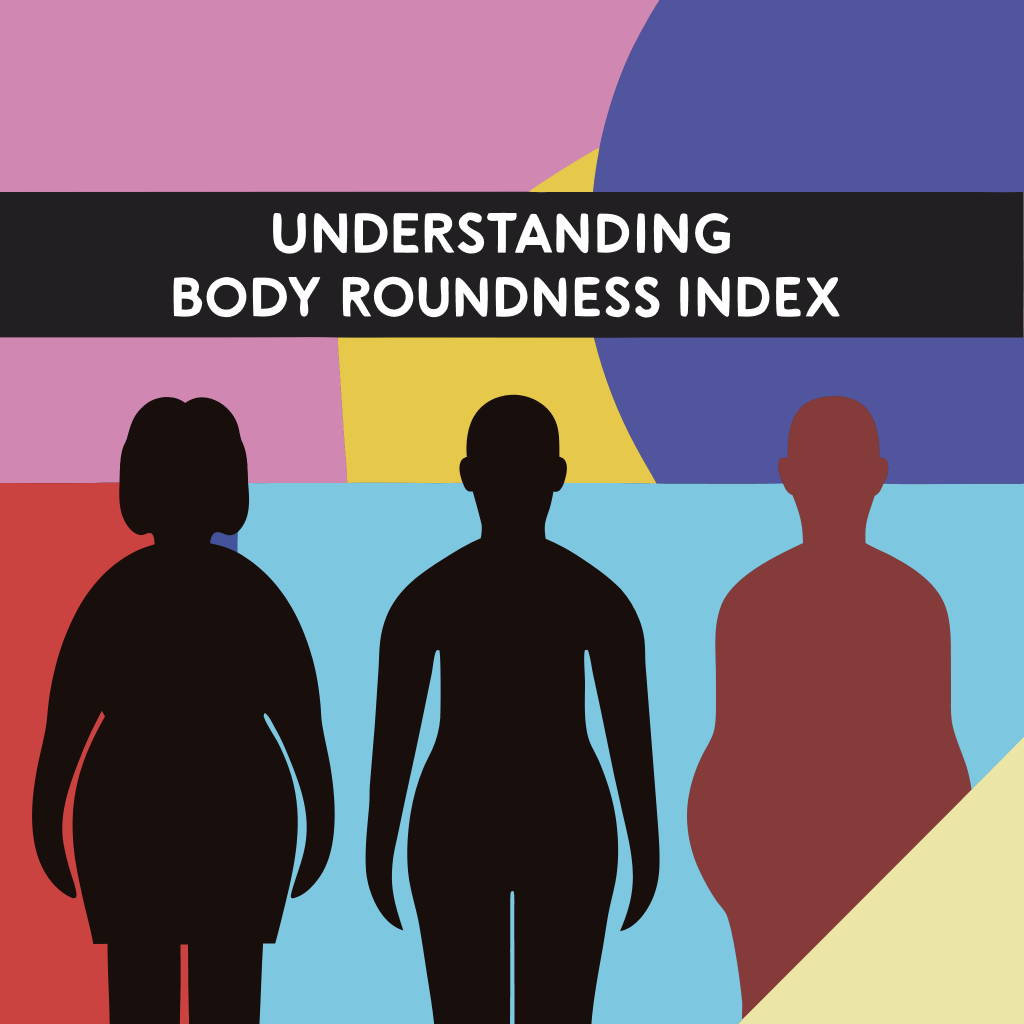
- Body Roundness Index (BRI) uses waist circumference and height to estimate body shape, providing a proxy for visceral fat accumulation without imaging
- A rising BRI score correlates with increasing visceral fat; lowering your waist circumference is the most direct way to reduce both
Two Types of Body Fat: Not All Fat Is Equal
When most people think about body fat, they picture what they can pinch. That’s subcutaneous fat — the layer stored just beneath the skin, mostly in the hips, thighs, and arms. It’s not entirely benign, but it’s relatively inert compared to what’s accumulating deeper inside the body.
Visceral fat is different. It’s stored within the abdominal cavity, surrounding and infiltrating your internal organs — the liver, pancreas, intestines, and heart. You can’t see it or pinch it. Someone with a flat-looking stomach can still carry clinically significant visceral fat.
This distinction matters because visceral fat doesn’t just sit there. It functions like an endocrine organ.
Why Visceral Fat Is Dangerous
Visceral adipose tissue (VAT) is metabolically active in ways that subcutaneous fat is not. It continuously releases:
- Free fatty acids into the portal vein, which flows directly to the liver — driving increased production of triglycerides and LDL cholesterol
- Pro-inflammatory cytokines including TNF-α (tumor necrosis factor-alpha) and IL-6 (interleukin-6), which promote systemic inflammation
- Adipokines that impair insulin signaling, contributing to insulin resistance before any weight change is apparent on a scale
The result is a cluster of metabolic disturbances that substantially increase the risk of serious disease:
Cardiovascular disease: Visceral fat promotes atherosclerosis — the build-up of plaques in arterial walls — through sustained low-grade inflammation and dyslipidemia. Research published in Nature identified visceral adiposity as a stronger predictor of cardiovascular events than total body weight or BMI.[1] For the full evidence, see BRI and Heart Disease Risk: What 2024–2025 Research Reveals.
Type 2 diabetes: Visceral fat is closely linked to insulin resistance, the defining feature of type 2 diabetes. Fat released from visceral depots impairs the liver’s ability to regulate blood glucose, independently of overall body weight.[2]
Metabolic syndrome: Excess visceral fat is considered a central driver of metabolic syndrome — a cluster of conditions (elevated blood glucose, high triglycerides, low HDL, high blood pressure, large waist circumference) that together dramatically increase the risk of heart disease and stroke.[3]
Fatty liver disease: Free fatty acids from visceral fat flow directly into the liver via the portal circulation, promoting hepatic fat accumulation and, over time, non-alcoholic fatty liver disease (NAFLD).[4]
Cancer: The same chronic inflammatory state — driven by TNF-α, IL-6, and elevated IGF-1 from visceral fat — creates a permissive environment for cancer cell growth. The evidence linking visceral fat to colorectal, endometrial, and breast cancer is covered in BRI and Cancer Risk: What 2024–2025 Research Shows.
Critically, these risks apply even to people whose weight appears normal on the scale. The phenomenon known as “normal weight obesity” or being “metabolically obese, normal weight” (MONW) describes individuals with a standard BMI but clinically significant visceral fat accumulation — and elevated metabolic disease risk that BMI completely misses.
How Visceral Fat Is Normally Measured
The reference standard for measuring visceral fat volume is abdominal MRI or CT scanning. These imaging modalities can precisely quantify visceral adipose tissue at specific body cross-sections. However, they are:
- Expensive (typically $300–$3,000 per scan)
- Only accessible in clinical or research settings
- Not practical for regular monitoring
DEXA (dual-energy X-ray absorptiometry) can estimate visceral fat as part of a full body composition scan, though it is less precise than MRI for visceral-specific quantification and still requires clinical access.
Waist circumference is the most widely used practical proxy for visceral fat. The World Health Organization identifies waist circumference thresholds as risk indicators: >94 cm (men) and >80 cm (women) indicate increased risk; >102 cm (men) and >88 cm (women) indicate substantially increased risk.[5] However, waist circumference alone doesn’t account for height — a 90 cm waist on a 150 cm person carries very different risk than the same measurement on a 190 cm person.
This is the gap that BRI was designed to address.
How BRI Estimates Visceral Fat Without Imaging
The Body Roundness Index was introduced by mathematician Diana Thomas, PhD, and colleagues in 2013.[6] The formula models the human body as an ellipse and calculates how “round” that ellipse is — a geometric property called eccentricity.
The formula:
BRI = 364.2 − 365.5 × √(1 − ((waist / (2π))² / (0.5 × height)²))
Only two measurements are needed: waist circumference and height. No weight, no hip measurement.
The geometric insight is straightforward: as visceral fat accumulates, the waist expands relative to height, making the body’s cross-sectional shape more circular (higher eccentricity value, higher BRI). The body is moving from an elongated oval toward a circle.
In their original validation paper, Thomas et al. compared BRI against MRI-measured visceral adipose tissue in a sample population. BRI accounted for a significant portion of the variance in measured visceral fat — outperforming BMI and performing comparably to waist-to-height ratio, while capturing the elliptical shape dynamics more precisely.[6]
Subsequent studies in diverse populations have largely confirmed that BRI is a useful surrogate for visceral adiposity when imaging is unavailable.
What Your BRI Score Tells You About Visceral Fat
BRI scores generally range from below 1 to above 15 in real populations. Here is how the ranges map to visceral fat risk:
| BRI Score | Body Roundness | Visceral Fat Risk |
|---|---|---|
| Below 2 | Very lean | Very low visceral fat; possible underweight |
| 2.0 – 3.5 | Lean to moderate | Low to average visceral fat accumulation |
| 3.5 – 5.0 | Moderate to round | Elevated visceral fat; increased metabolic risk |
| 5.0 – 6.9 | Round | High visceral fat; substantially elevated risk |
| Above 6.9 | Very round | Very high visceral fat; high risk for metabolic disease |
These ranges are approximate and have not been universally standardized. Age, sex, and ethnicity can shift where risk thresholds lie — which is why BRI should be interpreted as one indicator alongside other health data, not as a standalone diagnosis.
A rising BRI over time is a more meaningful signal than any single reading. An increase in BRI of 0.5–1.0 over 12 months with no change in height indicates expanding waist circumference — which reliably indicates accumulating visceral fat.
Important Limitations: What BRI Cannot Tell You
BRI estimates body shape, not visceral fat volume directly. There are scenarios where BRI can misrepresent visceral fat levels:
- Pregnancy significantly increases waist circumference without visceral fat accumulation
- Severe bloating or ascites (abdominal fluid) can artificially inflate BRI
- Measurement error in waist circumference (measuring too high or too low, pulling the tape too tight or too loose) propagates directly into BRI
- BRI does not distinguish between fat and muscle — a heavily muscled person with a large waist may have a high BRI but low visceral fat
- Current BRI thresholds were validated primarily in adult populations; research in children and adolescents is ongoing
No surrogate measure replaces clinical imaging when precise visceral fat quantification is medically necessary.
Reducing Visceral Fat: The Waist Circumference Connection
Because BRI directly incorporates waist circumference, the most reliable way to lower BRI is to reduce visceral fat — which in practice means reducing waist circumference.
The interventions with the strongest evidence base:
Dietary patterns: Mediterranean-style eating (high in olive oil, fish, legumes, vegetables; low in processed foods and refined carbohydrates) has demonstrated visceral fat reduction in multiple randomized controlled trials — independent of calorie restriction.[7]
Aerobic exercise: Both moderate-intensity continuous exercise and high-intensity interval training (HIIT) have been shown to reduce visceral fat, with some evidence that HIIT produces greater visceral fat loss per time invested than steady-state cardio.[8]
Resistance training: Building lean muscle mass improves insulin sensitivity and has been shown to reduce visceral fat even without significant changes in body weight.[8]
Sleep: Short sleep duration (under 6 hours) and poor sleep quality are independently associated with visceral fat accumulation. Adequate sleep (7–9 hours) supports hormonal regulation of fat distribution.
For a detailed protocol with timelines, see our guide to lowering your BRI score.
Medical Disclaimer
This article is for informational and educational purposes only. It does not constitute medical advice, diagnosis, or treatment. Body Roundness Index is a screening tool, not a diagnostic instrument. Visceral fat accumulation and its associated health risks should be assessed and managed in consultation with a qualified healthcare provider. Never disregard professional medical advice or delay seeking it based on information in this article.
Frequently Asked Questions
Can I have visceral fat even if I’m not overweight?
Yes. This is well-documented in the medical literature. Normal weight obesity — also called “metabolically obese, normal weight” — describes individuals with a BMI in the normal range who nonetheless carry clinically significant visceral fat. These individuals face elevated metabolic and cardiovascular risk that BMI does not detect. BRI, which incorporates waist circumference, is more likely to flag this pattern.
How quickly can visceral fat accumulate?
Visceral fat can accumulate relatively quickly during periods of caloric surplus combined with physical inactivity, chronic stress, or poor sleep. Research suggests visceral fat is also more responsive to dietary and exercise interventions than subcutaneous fat — making it both more dangerous and more tractable to change.
Is it possible to lose visceral fat without losing overall body weight?
Yes. Body recomposition — gaining lean muscle while losing visceral fat — can improve BRI and metabolic risk even with minimal change in scale weight. This is one reason BRI is a more meaningful metric than BMI for people following resistance training programs.
Is waist circumference alone as good as BRI?
Waist circumference is useful, but it doesn’t account for height. A person who is very tall typically has a larger overall body frame. BRI’s inclusion of height adjusts for this, making it a more equitable comparison across people of different statures.
How does visceral fat relate to inflammation?
Visceral adipose tissue releases pro-inflammatory cytokines (including IL-6 and TNF-α) continuously. This creates chronic low-grade systemic inflammation, which is implicated in atherosclerosis, insulin resistance, and other metabolic disease pathways. Reducing visceral fat — measurable through declining BRI — has been shown to reduce circulating inflammatory markers.
At what age does visceral fat typically start increasing?
Visceral fat tends to accumulate more readily with age, particularly after 40 in men and after menopause in women due to hormonal shifts. However, lifestyle factors (diet, physical activity, sleep, stress) can substantially modify this trajectory at any age.
References
Desprès JP, Lemieux I. “Abdominal obesity and metabolic syndrome.” Nature. 2006;444(7121):881–887. doi:10.1038/nature05488
Gastaldelli A, Cusi K. “From NASH to diabetes and from diabetes to NASH: Mechanisms and treatment options.” JHEP Reports. 2019;1(4):312–328. doi:10.1016/j.jhepr.2019.07.002
Alberti KG, Zimmet P, Shaw J. “The metabolic syndrome — a new worldwide definition.” Lancet. 2005;366(9491):1059–1062. doi:10.1016/S0140-6736(05)67402-8
Targher G, Day CP, Bonora E. “Risk of cardiovascular disease in patients with nonalcoholic fatty liver disease.” New England Journal of Medicine. 2010;363(14):1341–1350. doi:10.1056/NEJMra0912063
World Health Organization. “Waist Circumference and Waist–Hip Ratio: Report of a WHO Expert Consultation.” Geneva: WHO. 2008.
Thomas DM, Bredlau C, Bosy-Westphal A, et al. “Relationships between body roundness with body fat and visceral adipose tissue emerging from a new geometrical model.” Obesity. 2013;21(11):2264–2271. doi:10.1002/oby.20408
Kastorini CM, Milionis HJ, Esposito K, Giugliano D, Goudevenos JA, Panagiotakos DB. “The effect of Mediterranean diet on metabolic syndrome and its components: a meta-analysis of 50 studies and 534,906 individuals.” Journal of the American College of Cardiology. 2011;57(11):1299–1313. doi:10.1016/j.jacc.2010.09.073
Verheggen RJ, Maessen MF, Green DJ, Hermus AR, Hopman MT, Thijssen DH. “A systematic review and meta-analysis on the effects of exercise training versus hypocaloric diet: distinct effects on body weight and visceral adipose tissue.” Obesity Reviews. 2016;17(8):664–690. doi:10.1111/obr.12406
Related Articles
- BRI and Heart Disease Risk: What 2024–2025 Research Reveals — How visceral fat drives cardiovascular disease and what BRI predicts
- BRI and Cancer Risk: What 2024–2025 Research Shows — The cancer pathways driven by the same visceral fat mechanisms
- BRI by Age: Normal Scores at 30, 40, 50, and 60 — Why visceral fat accumulates with age and what the ranges mean
- How to Lower Your BRI: Evidence-Based Strategies — Evidence-backed interventions that specifically target visceral fat
- What Is Body Roundness Index (BRI)? — Complete explanation of how BRI is calculated and what the score ranges mean
- BRI for Children: Normal Ranges and What They Mean — How visceral fat risk manifests in younger populations