How to Weigh Yourself Accurately: Tips & Timing
Key Takeaways
- Weigh yourself first thing in the morning, after using the toilet and before eating or drinking, in minimal or no clothing.
- Put the scale on a hard, level floor, in the same spot every time.
- Day-to-day swings of 0.5–2 kg (1–4 lb) are normal, driven mostly by water, food and digestion, not fat.
- Women can see cycle-related changes. One study found weight about 0.45 kg higher during menstruation than in the first week of the cycle, mostly from fluid retention.
- Track the trend, not single readings. A weekly average tells you far more than any one morning.
Why Accurate Weighing Matters
Body weight is the only input BMI needs besides height. It’s also the measurement people most often get emotionally attached to. The scale can’t distinguish fat from muscle, water or last night’s dinner, which is exactly why how you weigh yourself matters.
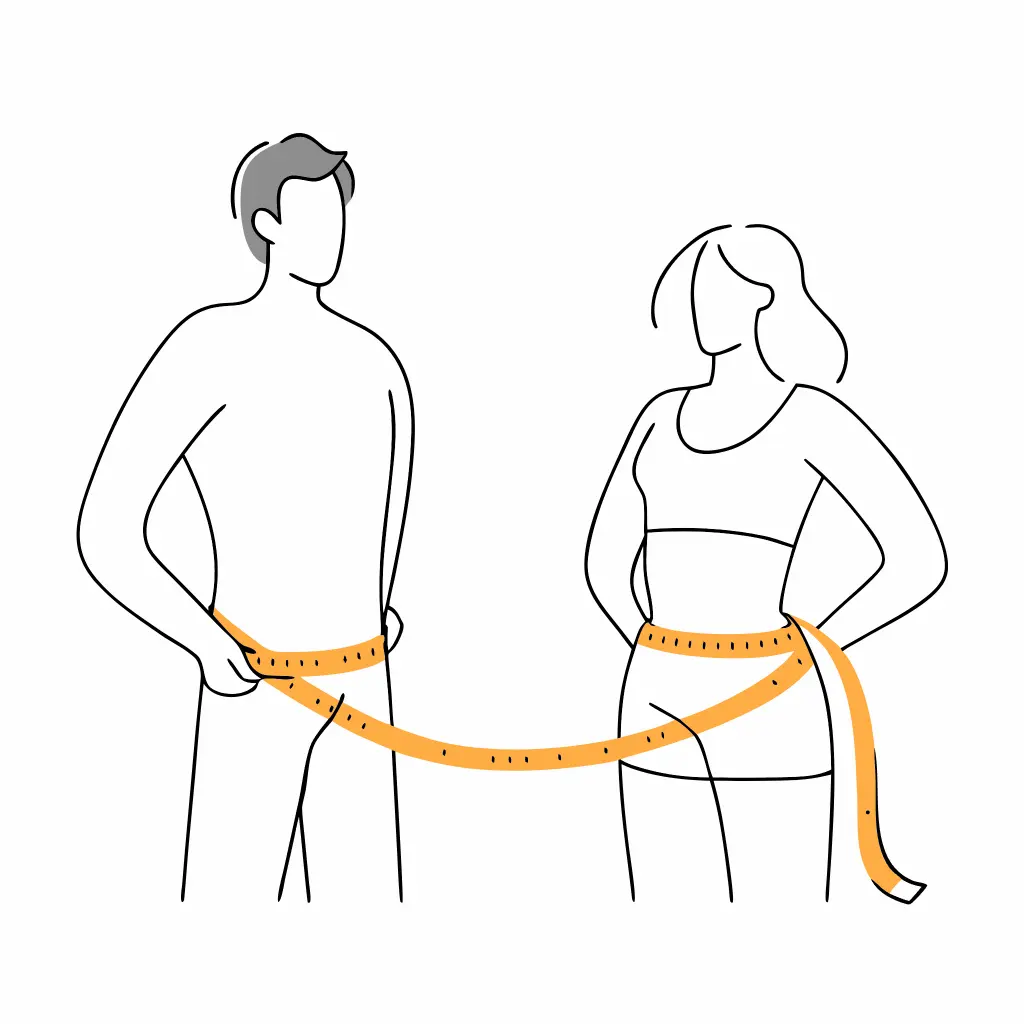
Weight on its own also tells you nothing about where your body stores fat. That’s why we recommend pairing weight with a waist measurement, and BMI with the Body Roundness Index. More on that below.
Choosing and Setting Up Your Scale
What kind of scale?
- Digital scales are the most practical choice for home use. Look for one that reads in 0.1 kg (or 0.2 lb) increments.
- “Body composition” or smart scales that estimate body fat use bioelectrical impedance. Their weight reading is generally reliable. Their body-fat percentage is much less so, because it changes with hydration and with when you last ate or exercised. Use the body-fat figure for trends at best.
- Analogue (dial) scales work but are harder to read precisely.
Where to put it
- On a hard, level floor: tile, wood or laminate. On carpet, many scales read inaccurately because the feet sink unevenly.
- In the same spot every time. Moving a scale between rooms, or even across a slightly uneven floor, can change the reading.
Check its consistency
Weigh a known object, such as a sealed 5 kg bag of flour or a set of dumbbells, or step on three times in a row. A good scale gives the same number each time, or within 0.1–0.2 kg. If readings jump around, try a different floor spot or replace the batteries.
Step-by-Step: How to Weigh Yourself
- Weigh yourself in the morning, after waking and using the toilet.
- Before eating or drinking anything, including water and coffee.
- Wear the same thing every time: nothing, or the same light underwear.
- If your scale needs it, tap it to zero before stepping on.
- Stand still in the centre of the scale, feet slightly apart, weight evenly distributed, looking straight ahead (not down at the display).
- Wait for the reading to stabilise, then record it immediately, to one decimal place.
- Use the same scale. Different scales, at home, the gym or the doctor’s, can disagree by a kilogram or more.
Why Your Weight Changes From Day to Day
If you weigh daily, you’ll see numbers bounce around. That is normal. The main causes:
- Food and drink in your digestive tract. A large meal adds weight until it’s digested.
- Water and salt. A salty meal makes your body hold extra water, often visible on the scale the next morning.
- Carbohydrates. Your body stores carbohydrate as glycogen, which binds water. A high-carb day after a low-carb stretch can add a kilogram or more overnight, none of it fat.
- Bowel movements and hydration. Clinicians note that meals, hydration and even bowel movements can affect your weight at any given time.[1]
- Exercise. Hard training can cause temporary water retention in muscles as they repair.
For perspective, losing 1 kg of body fat requires a substantial, sustained energy deficit. A 1.5 kg jump overnight is almost never fat.
Weighing Yourself: Men vs Women
For women
The menstrual cycle adds a predictable layer of fluctuation:
- In a 2023 study that measured 42 women twice a week across their cycles, body weight was about 0.45 kg higher during menstruation than in the first week of the cycle. The increase matched a rise in extracellular water, and fat mass didn’t change.[2]
- In several studies where women rated their symptoms daily, fluid retention peaked around the first day of the period.
- Individual patterns vary a lot. An older study that weighed women daily found that successive cycles in the same woman could look quite different.[3]
Practical tips:
- Compare weights from the same phase of your cycle, month to month, rather than week to week.
- Don’t judge a diet or training change by your weight in the days before or during your period.
- The Cleveland Clinic suggests that if your weight changes by more than 5 lb (about 2.3 kg) across your cycle, it’s worth discussing with your doctor.[1]
- Pregnancy, perimenopause and some hormonal contraceptives also change water balance and weight patterns.
For men
- Men don’t have a monthly cycle, but salt, alcohol, carbohydrate intake and training load cause similar swings.
- Weekend eating patterns often show up as a Monday spike that fades by midweek, a familiar pattern in daily weigh-in data.
- Men who strength-train may gain muscle while losing fat, so weight can stay flat while body shape improves. A tape measure catches what the scale misses.
How Often Should You Weigh Yourself?
There’s no single right answer. It depends on your goals and how you respond to the numbers.
| Approach | Good for | Watch out for |
|---|---|---|
| Daily, with a weekly average | Seeing a clear trend; people actively changing weight | Over-reacting to single readings |
| Once a week (same day, same conditions) | Most people who just want to keep an eye on things | A single bad morning can mislead; consider two weigh-ins a week |
| Monthly | Weight maintenance | Slow to catch changes |
If you weigh daily, add up the week’s readings and divide by the number of days. Compare one weekly average with the next, not Monday with Tuesday.
A note on wellbeing: if stepping on the scale causes anxiety, obsessive checking or disordered eating patterns, weigh less often or stop. Waist measurements and how your clothes fit are perfectly valid alternatives. If you are struggling, please talk to a healthcare professional.
Weight Alone Is Not the Full Story
Weight gives you BMI, and BMI is useful at population level. But two people with the same weight and height can carry very different amounts of abdominal fat.
That’s the gap the Body Roundness Index fills. It doesn’t use weight at all. Instead it uses your waist circumference and height to estimate how much fat sits around your middle. Our article on BRI vs BMI covers the differences in detail.
For the most complete picture at home, record:
- Weight, for BMI
- Waist, for BRI and waist-to-height ratio (how to measure)
- Height, once a year (how to measure)
Our calculator uses all three to give you both BMI and BRI at once.
Common Weighing Mistakes
- Weighing at different times of day. Evening weight is typically higher than morning weight.
- Weighing after a meal or a workout.
- Switching scales.
- Scale on carpet or an uneven floor.
- Wearing different clothes. Jeans alone can weigh 0.5–1 kg.
- Reacting to a single reading. Wait for the weekly trend.
Frequently Asked Questions
What is the best time to weigh yourself?
In the morning, after using the toilet and before eating or drinking. That’s when your weight is least affected by food and fluid, and easiest to reproduce.
Why do I weigh more at night?
Everything you eat and drink during the day adds weight until it’s digested or excreted. An evening reading 1–2 kg above your morning weight is normal.
Why does my weight go up after a workout or a high-carb meal?
Both lead your body to store extra glycogen and water. This is temporary and doesn’t reflect fat gain.
Should I weigh myself during my period?
You can, but expect a slightly higher reading. It’s more useful to compare weights from the same cycle phase across months.
My scale and my doctor’s scale disagree. Which is right?
Different scales can vary by a kilogram or more, and clinic weights are usually taken clothed and at different times of day. For tracking, consistency with one scale matters more than which scale is “right.”
References
Cleveland Clinic: “Do You Gain Weight When on Your Period?” health.clevelandclinic.org
Body composition across the menstrual cycle: 2023 study of 42 women; weight 0.45 kg higher during menstruation vs the first cycle week, linked to extracellular water. PubMed 37395124
Variations in body weight of young women during the menstrual cycle: British Journal of Nutrition, 1965. cambridge.org
Related Articles
- How to Take Body Measurements: Complete Guide: a full routine for tracking progress
- How to Measure Your Height Accurately at Home: the other half of BMI
- How to Measure Body Fat With a Tape Measure: estimate body fat without a smart scale
- BRI vs BMI: Which Is More Accurate?: why weight isn’t the whole picture
Calculate BMI and BRI Together
Got your morning weight? Enter it into our free BMI and BRI calculator together with your height and waist. You’ll see both scores side by side, calculated privately in your browser.