How to Calculate BRI: Step-by-Step Formula Guide
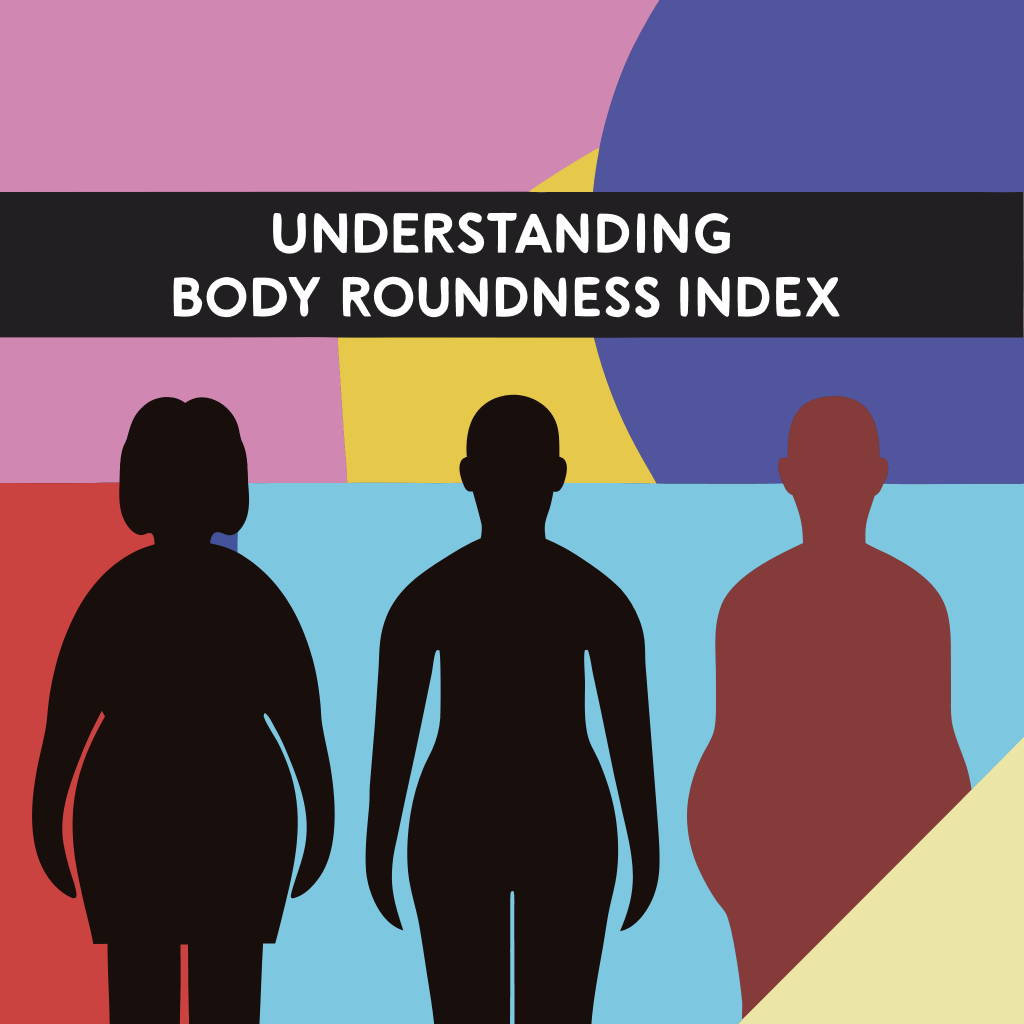
Key Takeaways
- BRI requires two measurements: waist circumference and height — no weight needed
- The formula is based on a geometric ellipse model, not a simple ratio
- Metric and imperial units both work — just use consistent units throughout
- A healthy BRI generally falls between 2 and 4; above 6 signals high health risk
- Online calculators eliminate rounding errors and are faster for most people
- Accuracy depends almost entirely on correct waist measurement technique
What You Need to Calculate BRI
Unlike BMI, which only needs your weight and height, the Body Roundness Index (BRI) uses waist circumference and height to estimate your body’s geometric “roundness.” This focus on waist size is what makes BRI a better predictor of visceral fat — the dangerous fat that accumulates around your organs.[1]
Before you start, gather:
- Height — in centimetres (cm) or inches (in)
- Waist circumference — in centimetres (cm) or inches (in)
- A calculator (the formula involves square roots)
You do not need your weight to calculate BRI.
How to Measure Your Waist Correctly
Getting this measurement right is the most important step. An incorrect waist measurement produces an incorrect BRI — and the most common mistake is measuring in the wrong place.
Step-by-step waist measurement:
- Stand upright with feet together and breathe normally
- Locate your natural waist — the narrowest point of your torso, roughly midway between your lowest rib and the top of your hip bone
- Wrap a flexible tape measure around your waist at this point, keeping it parallel to the floor
- The tape should sit snugly against your skin — not compressing it
- Take the reading at the end of a normal exhale (do not suck in your stomach)
- Measure twice and average the two readings
Common mistakes to avoid:
- Measuring at the belly button (this is often too low and inflates your measurement)
- Pulling the tape too tight
- Holding your breath or tensing your abdomen
- Measuring over thick clothing
The BRI Formula
The BRI formula was introduced in 2013 by Thomas et al. and is based on the mathematical model of a human body as an ellipse.[1]
BRI = 364.2 − 365.5 × √(1 − ((WC ÷ (2π))² ÷ (0.5 × H)²))
Where:
- WC = waist circumference in metres (or convert: cm ÷ 100)
- H = height in metres (or convert: cm ÷ 100)
- π ≈ 3.14159
If you are using inches, convert first:
- Inches → metres: multiply by 0.0254
The formula calculates the “eccentricity” of your body’s elliptical cross-section — how elongated vs circular your torso is. A higher BRI means a rounder, more circular cross-section (more central fat). A lower BRI means a more elongated shape (less central fat).
Step-by-Step Worked Example (Metric)
Let’s calculate BRI for a person who is 175 cm tall with a 85 cm waist circumference.
Step 1: Convert to metres
- Height (H) = 175 ÷ 100 = 1.75 m
- Waist circumference (WC) = 85 ÷ 100 = 0.85 m
Step 2: Calculate WC ÷ (2π)
- 2π = 2 × 3.14159 = 6.28318
- 0.85 ÷ 6.28318 = 0.13527
Step 3: Square the result
- 0.13527² = 0.01830
Step 4: Calculate (0.5 × H)²
- 0.5 × 1.75 = 0.875
- 0.875² = 0.76563
Step 5: Divide and subtract from 1
- 0.01830 ÷ 0.76563 = 0.02390
- 1 − 0.02390 = 0.97610
Step 6: Take the square root
- √0.97610 = 0.98798
Step 7: Apply the BRI formula
- BRI = 364.2 − (365.5 × 0.98798)
- BRI = 364.2 − 361.21
- BRI ≈ 2.99
A BRI of 2.99 falls in the “Slim to Average” category — a healthy result for most adults.
Step-by-Step Worked Example (Imperial)
For a person who is 5 ft 9 in tall (69 inches) with a 34-inch waist:
Step 1: Convert inches to metres
- Height (H) = 69 × 0.0254 = 1.7526 m
- Waist (WC) = 34 × 0.0254 = 0.8636 m
Step 2: Calculate WC ÷ (2π)
- 0.8636 ÷ 6.28318 = 0.13745
Step 3: Square the result
- 0.13745² = 0.01889
Step 4: Calculate (0.5 × H)²
- 0.5 × 1.7526 = 0.8763
- 0.8763² = 0.76790
Step 5: Divide and subtract from 1
- 0.01889 ÷ 0.76790 = 0.02460
- 1 − 0.02460 = 0.97540
Step 6: Take the square root
- √0.97540 = 0.98762
Step 7: Apply the BRI formula
- BRI = 364.2 − (365.5 × 0.98762)
- BRI = 364.2 − 361.08
- BRI ≈ 3.12
A BRI of 3.12 is also in the healthy range.
BRI Score Ranges and What They Mean
| BRI Score | Category | Health Implication |
|---|---|---|
| Below 2 | Very Slim | May indicate underweight; low visceral fat |
| 2.0 – 3.4 | Slim | Low visceral fat; low cardiometabolic risk |
| 3.4 – 4.5 | Average | Moderate body roundness; average risk |
| 4.5 – 5.5 | Above Average | Elevated central adiposity; increased risk |
| 5.5 – 6.9 | High | High visceral fat; significantly elevated risk |
| Above 6.9 | Very High | Very high visceral fat; strongly elevated risk |
These ranges are based on population studies and should be interpreted alongside other health markers, not in isolation.[2] Age, sex, and ethnicity can influence what constitutes an optimal BRI for a specific individual.[3]
Why Manual Calculation Can Go Wrong
The BRI formula involves several steps where small rounding errors compound. For example:
- Rounding π to 3.14 instead of 3.14159 introduces ~0.05% error per step
- Rounding intermediate results (e.g., 0.13527 → 0.135) shifts the final BRI by 0.1–0.2 points
- Using centimetres without converting to metres produces a wildly incorrect result
For practical health tracking, an online BRI calculator eliminates these issues entirely — it applies the formula to full precision instantly.
BRI vs BMI: Why the Calculation Difference Matters
| Feature | BRI | BMI |
|---|---|---|
| Measurements needed | Waist + Height | Weight + Height |
| What it captures | Central (visceral) fat | Total body mass |
| Formula complexity | Multi-step (ellipse geometry) | Simple division |
| Predictor of visceral fat | Strong [1] | Weak |
| Affected by muscle mass | No | Yes |
BMI is simpler to calculate but misses where fat is distributed. Two people with identical BMIs can have very different BRI scores — and very different health risks. BRI directly measures the waist-to-height relationship that correlates most strongly with cardiovascular disease, diabetes, and metabolic syndrome.[2]
Frequently Asked Questions
Do I need my hip circumference to calculate BRI?
No. The BRI formula only requires waist circumference and height. Hip circumference is used in some other body composition metrics (such as the Waist-to-Hip Ratio) but is not part of the BRI calculation.
Can I calculate BRI in centimetres without converting?
No. The formula requires measurements in metres. Divide centimetres by 100 before applying the formula. Using centimetres directly will produce a BRI value in the hundreds, which is meaningless.
Is BRI the same for men and women?
The formula is the same, but healthy BRI ranges differ slightly by sex. Women naturally have higher body fat percentages than men, and research suggests optimal BRI cutoffs may vary accordingly.[3] Some studies propose sex-specific thresholds for clinical use.
How accurate is BRI if I can’t measure my waist precisely?
Accuracy decreases with imprecise measurement. A 2 cm error in waist circumference can shift your BRI by approximately 0.2–0.3 points. Measuring twice and averaging the results improves reliability.
Should I recalculate BRI on the same day I take measurements?
It is best to measure at the same time of day — morning before eating is ideal — to reduce variability from bloating, meals, and water retention. Daily fluctuations of 1–2 cm in waist circumference are normal and do not reflect actual fat changes.
Can I use BRI instead of BMI at a doctor’s appointment?
BRI is not yet part of standard clinical protocols in most countries, though research supports its superiority for metabolic risk assessment.[2] You can share your BRI with your doctor alongside your weight and waist measurement — the waist measurement itself is clinically useful even outside the BRI framework.
References
BRI formula and development: Thomas DM, Bredlau C, Bosy-Westphal A, et al. “Relationships between body roundness with body fat and visceral adipose tissue emerging from a new geometrical model.” Obesity. 2013;21(11):2264–2271. doi:10.1002/oby.20408
BRI and cardiometabolic risk: Kuang M, Yang R, Huang J, et al. “Body roundness index and its association with metabolic syndrome in Chinese adults.” BMC Endocrine Disorders. 2020;20(1):115. doi:10.1186/s12902-020-00595-2
Sex and age differences in BRI interpretation: Rico-Martín S, Calderón-García JF, Sánchez-Rey P, et al. “Effectiveness of body roundness index in predicting metabolic syndrome: A systematic review and meta-analysis.” Obesity Reviews. 2020;21(7):e13023. doi:10.1111/obr.13023
Medical Disclaimer: This article is for informational and educational purposes only. It is not intended as medical advice, diagnosis, or treatment. Always consult a qualified healthcare provider with questions about your health or body measurements.
Related Articles
- What Is Body Roundness Index (BRI)? — The complete guide to what BRI measures and why it matters
- Visceral Fat: What It Is and How BRI Measures It — Why waist circumference is the right input for health risk estimation
- BRI by Age: Normal Scores at 30, 40, 50, and 60 — Compare your result to age-adjusted healthy ranges
- BRI vs BMI: Which is More Accurate? — How BRI outperforms BMI for metabolic risk detection
- How to Lower Your BRI: Evidence-Based Strategies — What to do once you know your score
Calculate Your BRI Now
Skip the manual steps — use our free BRI calculator to get your Body Roundness Index instantly. Enter your height and waist circumference and see your score in seconds.
Related Articles
- BRI vs BMI: Which is More Accurate? — Side-by-side comparison of both metrics
- BRI by Age: Normal Scores at 30, 40, 50, and 60 — Age-specific healthy BRI ranges
- How to Lower Your BRI: Evidence-Based Strategies — Practical steps to reduce visceral fat